

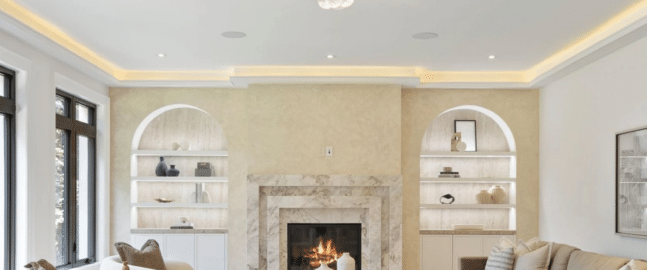
Anyone can rent furniture and put it in a room. Making that room read as luxury the moment a buyer scrolls past it on MLS is a different skill entirely — and it’s the one thing a lot of luxury home staging falls short on.
At Lux, we’ve spent over a decade working exclusively with agents and stagers who need listings to compete at the top of the market. Here’s what we’ve learned actually separates furniture that photographs luxury from furniture that just photographs “fine.”
Scale Matters More Than Buyers Realize
The single most common staging mistake isn’t style — it’s proportion. Furniture that’s slightly too small for a room reads as an afterthought in photos, even if every individual piece is beautiful. A luxury space needs furniture scaled to fill the room with intention, not just occupy it. This is why we select pieces room-by-room rather than pulling from a single generic set — a piece that photographs perfectly in a compact condo living room can look undersized in a spacious family home.
Texture Reads Better Than Pattern On Camera
Bold patterns can look striking in person and flat in a photo. Texture — a substantial weave, a tactile finish, layered materials — is what actually translates through a lens and gives a room depth. When we curate for a luxury listing, we’re thinking about how a piece will look compressed into a 4×6 MLS thumbnail, not just how it looks in the room.
Cohesion Beats “More” in Luxury Home Staging
It’s tempting to think more furniture, more accessories, and more layering automatically signals luxury. In practice, the opposite is usually true. High-end spaces photograph best when every piece feels intentional and nothing is competing for attention. A luxury buyer notices restraint as much as they notice quality — a room that feels edited, not filled, reads as confident and expensive.
Finish Quality Shows Up Even in Photos
Buyers can’t touch the furniture through a photo, but finish quality still shows. Cheap laminate catches light differently than real wood or a quality veneer. A budget upholstery fabric photographs with a flatness that a well-chosen textile doesn’t have. This is one of the least talked-about differences between rental collections — and one of the most visible once you know to look for it.
The Details That Actually Signal “Lived In, Not Staged”
Counterintuitively, the most luxurious staged rooms often include small imperfections of intention — a throw slightly draped rather than perfectly folded, a stack of books at an angle, a single statement object rather than a symmetrical pair. Perfectly matched, perfectly symmetrical staging can start to look like a furniture showroom rather than a home. Luxury buyers are looking for a lifestyle to imagine themselves into, not a catalogue.
Why This Matters for Your Next Listing
None of this is about spending more — it’s about choosing furniture with these specifics in mind from the start. That’s the entire premise behind Lux: every piece in our collection has been selected by an agent and stager duo who understand exactly what a camera picks up and what a buyer responds to.
If you’re staging a property where presentation needs to compete at the top of the market, browse our current rental collection or reach out and we’ll help you put together a room that photographs the way it deserves to.