

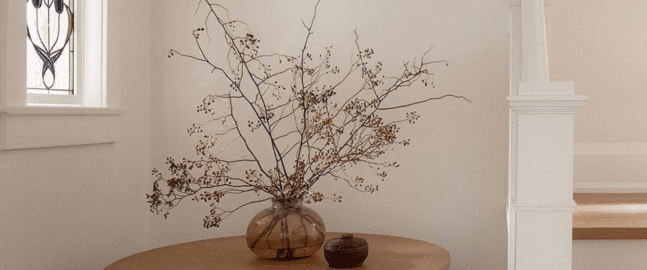
The Case for Neutral
Neutral staging exists for a reason: it’s designed to appeal to the widest possible range of buyers, without any strong style choice working against the sale. A neutral palette lets buyers project their own taste onto the space rather than reacting to someone else’s.
Where Fully Neutral Can Fall Flat
The risk with going too neutral is a listing that feels forgettable — beige on beige, no texture, nothing that gives a buyer a reason to remember the property after touring several similar homes in one afternoon. In a competitive market, forgettable is a real cost.
What Trend-Forward Staging Adds
A few trend-forward touches — a statement light fixture, an interesting accent chair, a bolder piece of art — can make a listing memorable without alienating buyers, as long as the bones of the staging stay neutral. These pieces act as accents, not the foundation of the room.
The 80/20 Approach
A useful rule of thumb: keep roughly 80% of a room neutral — walls, large furniture, flooring treatments — and use the remaining 20% for personality: accent pillows, art, a distinctive light fixture, or a single statement piece. This keeps broad appeal intact while still giving the space a point of view.
Matching the Approach to the Buyer Pool
A listing in a design-forward neighbourhood or a higher price point can generally support more trend-forward choices, since buyers there are often looking for a home with some design confidence. A more conservative or family-focused market may reward staying closer to neutral.
The Takeaway
Neutral and trend-forward aren’t opposites — the strongest staging usually blends a neutral foundation with a handful of intentional, on-trend accents. That combination gives a listing broad appeal while still standing out in a buyer’s memory after a day of showings.